Libro de recetas de “Real California”
¡Es hora de arremangarse y poner manos a la obra! Nuestro libro de recetas está repleto de nuevas recetas y de tus platos tradicionales favoritos. ¿Y la mejor parte? Está a solo un clic de distancia.
Recipes





Prep time: 15 minutes
Cook time: 7-8 minutes per batch
Whisk eggs and herbs together in a large bowl. Add the cottage cheese, salt, pepper and lemon zest and fold until combined.
Fold in the flour, baking powder and peas. The batter should be the consistency of cookie dough, scoopable, and not runny. If it seems too watery, add flour by the tablespoon until it is the desired consistency.
Heat a large non-stick skillet over medium high heat. Add 2 tablespoons of oil. Using a scoop or large spoon, scoop about 2 tablespoons of batter and place in the oil. Repeat with another 3-4 scoops of batter. Flatten batter with the back of the spoon. Cook for 3-4 minutes on the first side, or until golden brown. Carefully flip and cook for 3-4 minutes on the remaining side.
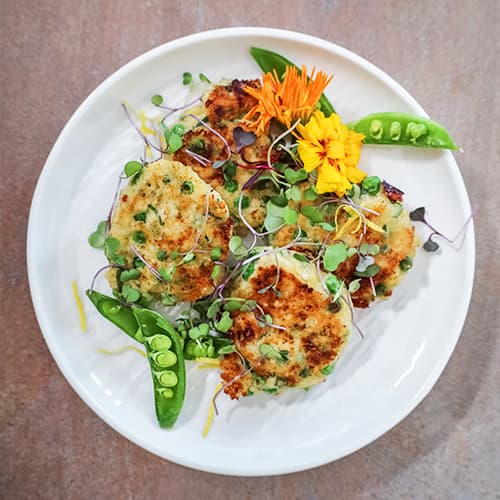
Remove fritters to a cooling rack and repeat process with remaining batter. Serve immediately, garnished with lemon wedges, snap peas, microgreens and fresh herbs. Fritters may be made in advance. Chill in the fridge and reheat in a 350°F oven for 15 minutes or until warm and crispy.
Yield: about 15 fritters
Recipe courtesy of Alison Needham @agirl_defloured/CA Grown for CMAB
The nutrition information provided is an estimate and is for informational purposes only and is not intended to diagnose, treat, cure, or prevent any disease. While classifications were prepared by a registered dietitian, this information is not intended to be a substitute for professional medical advice, diagnosis, or treatment. These recipe categories are for general menu planning and educational purposes and are not individualized nutrition or medical nutrition therapy. Always seek the advice of your physician, registered dietitian, or a qualified health provider with any questions you may have regarding a medical or health condition, nutrition needs or diet. We strive to provide accurate data using industry-standard tools, but these figures can vary greatly depending on the specific brands, quantities, and preparation methods used in your own kitchen.
GLP-1 Appropriate
These categories are not complete meal plans and do not guarantee any specific health outcome. They are simply a way of organizing recipes by approximate macronutrient pattern.
Eating pattern based on ~1,500 calories/day, informed by common nutrition guidance for people using GLP-1 medications.
43g carbs, 16g fat, 43g protein per meal + >21g-30g average fiber, 2300mg sodium daily.
This eating pattern is structured to balance macronutrients in a way that can complement nutrition guidance you may receive while using GLP-1 medications. CMAB recipes in this category stay within recommended carbohydrate and fat limits, and while a recipe/serving may not individually reach the full 43g protein target, adding additional protein including a low-fat dairy option can help meet that need. Recipes labeled GLP-1 Appropriate are intended for general menu planning only and are not designed to change your medication dose or replace personalized advice from your healthcare team.
Keto-Friendly
These categories are not complete meal plans and do not guarantee any specific health outcome. They are simply a way of organizing recipes by approximate macronutrient pattern.
Eating pattern based on 2000 kcals.
17g carbs, 56g fat, 25g protein per meal + 6.25g fiber*, 2300mg sodium daily.
This pattern uses very low carbohydrate intake (17g) and higher fat (56g) to align with ketogenic-style eating patterns, in which the body may shift from primarily using carbohydrates to using fat for energy. Some people, under guidance from their healthcare providers, choose ketogenic-style eating patterns as part of their approach to managing weight or blood sugar. Whether this type of pattern is appropriate for you depends on your individual health needs and should be discussed with your healthcare team. *Please note: the Dietary Guidelines for Americans recommends a minimum of 25 g/fiber per day for traditional intake. Typical intakes are much lower with a ketogenic eating pattern (about 6.25 g per day) . This type of pattern should be followed only under the supervision of a healthcare provider or registered dietitian, especially if you have existing medical conditions. Recipes labeled Keto-Friendly are intended for general menu planning only and are not designed to change your medication dose or replace personalized advice from your healthcare team.
Low-Carb
These categories are not complete meal plans and do not guarantee any specific health outcome. They are simply a way of organizing recipes by approximate macronutrient pattern.
Eating pattern based on 2000 kcals.
44g carbs, 22g fat, 67g protein per meal + 25g fiber, 2300mg sodium daily.
This pattern provides a moderate carbohydrate reduction (44g) for people who prefer to limit carbohydrate intake as part of their overall eating pattern. Its higher protein (67g) and fiber content are intended to help many people feel satisfied after meals and support regular digestion. This macronutrient profile is intended to offer a balanced option that many people find practical for everyday meals. This balanced macronutrient profile promotes metabolic health. Recipes labeled Low-Carb are intended for general menu planning only and are not designed to change your medication dose or replace personalized advice from your healthcare team.

Libro de recetas de “Real California”
¡Es hora de arremangarse y poner manos a la obra! Nuestro libro de recetas está repleto de nuevas recetas y de tus platos tradicionales favoritos. ¿Y la mejor parte? Está a solo un clic de distancia.